Introduction
Thanksgiving is Thursday, November 26, 2026, and the week around it is the busiest food week of the year in the United States. It is not just one big dinner. It is a full week of grocery runs, meal kits picked up cold, catered trays moving from kitchen to venue, bakery orders, office parties, and last-minute trips for the one ingredient somebody forgot.
A refrigerated van rental for Thanksgiving is how that food gets where it needs to go without warming up on the way. A turkey, a tray of stuffing, a box of pies, or a case of fresh produce does not stay safe in a warm car boot, a regular van, or the back of a pickup. It needs to stay cold from the fridge to the table, and that is exactly what a refrigerated van, truck, or trailer is built to do.
This is not a small side job for food businesses in Los Angeles and Las Vegas. The holiday numbers show how big the week really is, and they explain why caterers, grocers, restaurants, and families who are feeding a crowd plan their cold transport early — and why they book a refrigerated van rental for Thanksgiving week instead of hoping a regular vehicle will do.
Why Thanksgiving week is different from any other week
Most weeks, a food business moves a steady amount of cold food. Thanksgiving week is a surge, not a steady week.
Adobe forecasts $26.1 billion in online grocery sales for the holiday season, up 10.3% on last year — the fastest growth of any major online shopping category. The National Retail Federation forecasts about $1.013 trillion in November and December retail sales in the United States. That is the scale of the season: more shopping, more groceries, more prepared food, and more deliveries, all in a few short weeks.
DoorDash has expanded its catering service across the United States for the holidays, and the day before Thanksgiving is one of the biggest grocery and prepared-food delivery days of the year. Households shop big on Monday through Wednesday, restaurants sell pre-made pies, holiday sides, and catered trays, and offices order holiday lunches and party food. Then Black Friday, on Friday, November 27, 2026, flips the focus to retail and restocking, while families are still eating leftovers and ordering in.
In other words, the cold chain does not get a day off that week. Every turkey, every tray, every cake, and every box of fresh produce has to stay at the right temperature while it is loaded, driven, unloaded, and served. A single warm hour in transit can undo a whole day of cooking.
The 40-degree rule: why cold food cannot ride in a regular van
Food safety is not a matter of opinion. It is a matter of temperature and time, and Thanksgiving is when both of those get tested.
The U.S. Department of Agriculture and the Food and Drug Administration set the same basic rule: cold food must be kept at 40°F or below, and hot food at 140°F or above. The range between 40°F and 140°F is called the danger zone, because bacteria grow most rapidly in that range. Perishable food should not be left out of refrigeration for more than two hours — and not more than one hour if the temperature is above 90°F.
That rule covers the drive, not just the table. A covered dish in a back seat is neither cold nor hot. It is sitting in the danger zone, and the clock is the only thing protecting it. A cooler with ice packs helps for a short trip, but it does not hold a steady temperature for a full catering run, a multi-stop grocery route, or a long drive across Los Angeles in holiday traffic.
A refrigerated van rental for Thanksgiving solves that problem directly. The cargo area is held at a set temperature — chilled or frozen — for the whole trip. The food goes from a cold fridge into a cold van, and out of the cold van into a cold fridge or straight onto the serving table. There is no warm gap in the middle.
That matters most for the foods Thanksgiving is built on: turkey and other meats, egg-rich pies such as pumpkin, pecan, and custard, dairy-based sides, salads, seafood, and prepared meal kits that are picked up cold and reheated at home. All of them need to stay at 40°F or below until they are served or reheated.
Thanksgiving week, day by day: when the cold food moves
Thanksgiving week has a shape, and it helps to plan around it. Here is how the week usually runs for the food businesses we work with in Los Angeles and Las Vegas.
Monday and Tuesday: the big grocery shop
Monday and Tuesday are the big shopping days. Households stock up for the week, and grocery delivery orders run heavy — turkeys, sides, fresh produce, and last-minute ingredients. Restaurants and caterers take delivery of their raw ingredients, and bakeries start their pie and bread production in earnest.
This is a refrigerated van week for grocery restocking and supplier runs. A van can carry a full load of chilled groceries at a steady temperature, make several stops, and keep everything cold between stops. A regular van cannot do that, because every stop lets warm air in and the cargo area never gets cold again.
Wednesday: the day before Thanksgiving
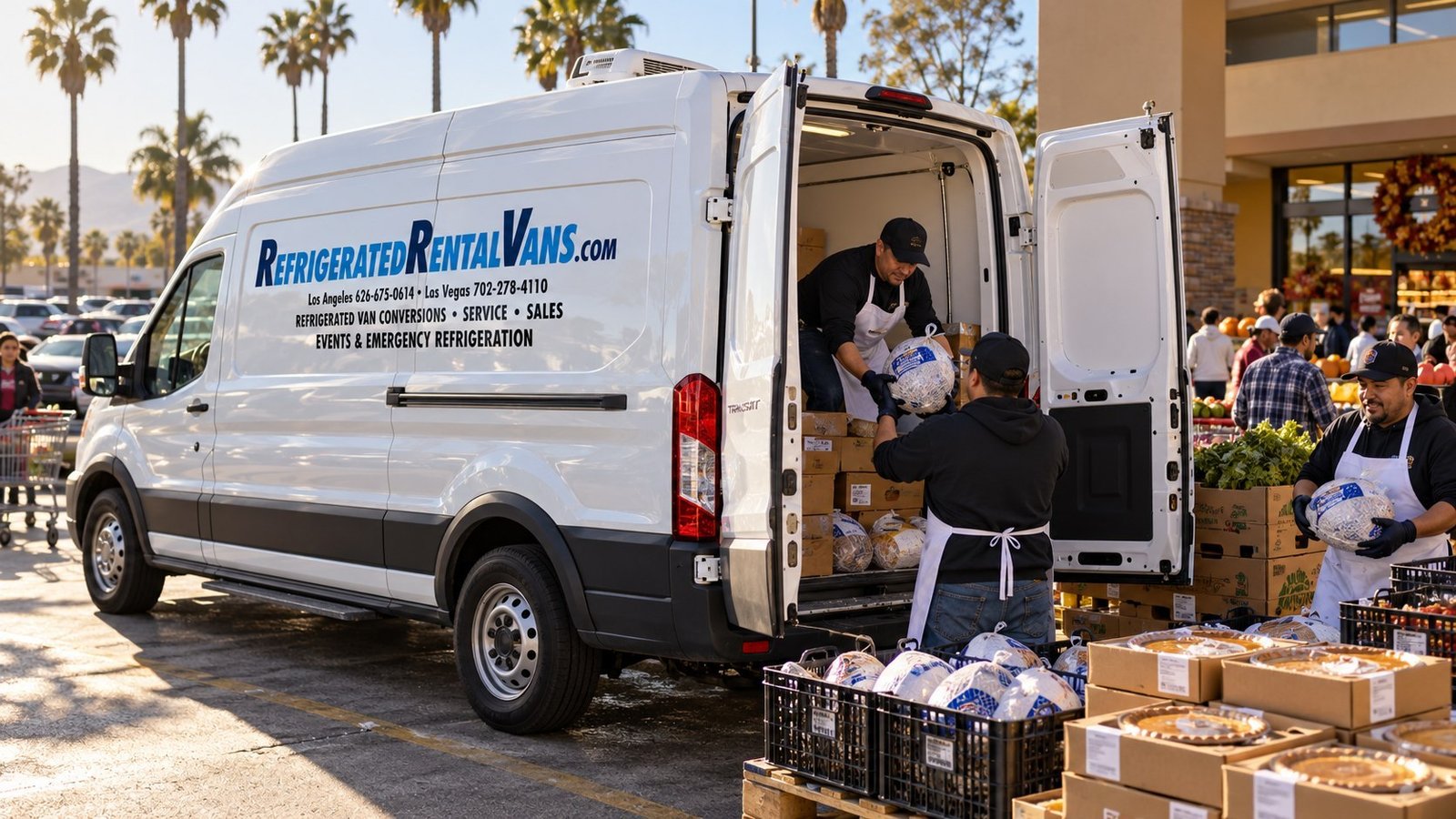
Wednesday is one of the busiest food days of the year. It is pick-up day for Thanksgiving meal kits and pre-ordered meals, which are usually picked up cold and reheated at home. It is also the last big catering day before the holiday itself, with trays, sides, and desserts moving from kitchens to venues, offices, and homes.
If you are a caterer, Wednesday is the day your reputation is on the line. A tray that arrives warm is a tray that cannot be served safely. A refrigerated van, truck, or trailer keeps that tray cold for the whole route, even with multiple drops.
Thursday, Thanksgiving Day: serving day
Thanksgiving Day itself is quieter on the roads, but the food is still moving. Families make short trips between houses, caterers deliver to venues that are hosting dinner, and restaurants that are open serve holiday meals. The evening often brings a second wave of food delivery, from people who decided not to cook after all.
A refrigerated van on Thanksgiving Day is usually a short, focused job: one venue, one family, one set of trays, delivered cold and on time.
Friday, Black Friday: restock and leftovers
Black Friday, November 27, 2026, is a retail day, but it is also a food day. Households restock after Thanksgiving, order in, and shop for the weekend. Grocery and food delivery builds through the afternoon, and restaurants and caterers start their next round of holiday orders.
This is also the day when leftovers need to be handled properly. The USDA guidance is clear: refrigerate perishable leftovers within two hours of cooking, divide them into shallow containers so they cool faster, and reheat them to 165°F. A refrigerated van is the same idea on wheels — keep it cold, keep it moving, and do not let it sit warm.
How caterers use a refrigerated van at Thanksgiving
Caterers are the clearest example of why a refrigerated van rental for Thanksgiving matters, because they are carrying somebody else’s reputation as well as their food.
A caterer cooking for 200 guests does not have room for a mistake. The food is prepared in advance, packed cold, and then it has to travel. If the van is not refrigerated, the food warms up in transit, and there is no way to cool it back down safely at the venue.
With a refrigerated van, the process is simple and it works:
- The food is cooked and packed cold, in shallow containers that stack well.
- It is loaded into a refrigerated van that is already cold, not a warm van that is still cooling down.
- The van holds the temperature for the whole drive, even with traffic and multiple stops.
- At the venue, the food comes out cold and goes straight into a fridge, a chiller, or onto the serving table.
That is also why caterers use the same process for office holiday parties, weddings, and other large events through December. The food is the product, and the cold chain is what protects it.
Grocery, meal kits, bakeries, and florists: who else needs cold transport that week
Thanksgiving week is not only about caterers. Several other businesses rely on cold transport at the same time, and they all compete for the same vans.
Grocery stores and delivery services. Grocery orders double or triple in Thanksgiving week. A refrigerated van carries chilled and frozen groceries together, in separate temperature zones where needed, and keeps them cold on a multi-stop route. That is why grocery delivery is one of the fastest-growing uses of refrigerated vans during the holidays.
Thanksgiving meal kits. Many restaurants and cafes sell Thanksgiving meals to go, packed cold so the customer heats them at home. Those kits have to stay cold from pick-up to home, and a refrigerated van is how a restaurant moves a full day’s worth of kits without a single one warming up.
Bakeries. Pies, cakes, and desserts need to stay cold, especially egg-rich and cream-based ones. A refrigerated van keeps them at the right temperature and keeps them flat and undamaged in transit, which a warm car cannot do.
Florists. Thanksgiving is also a flower week, with centerpieces, bouquets, and arrangements for tables and venues. Flowers need to stay cool to stay fresh, and a refrigerated van is the same cold transport florists use year-round, just busier in November.
Office holiday parties. Offices order catered lunches and party food through December. A refrigerated van moves that food from the caterer to the office, cold and on time, even for a large group order.
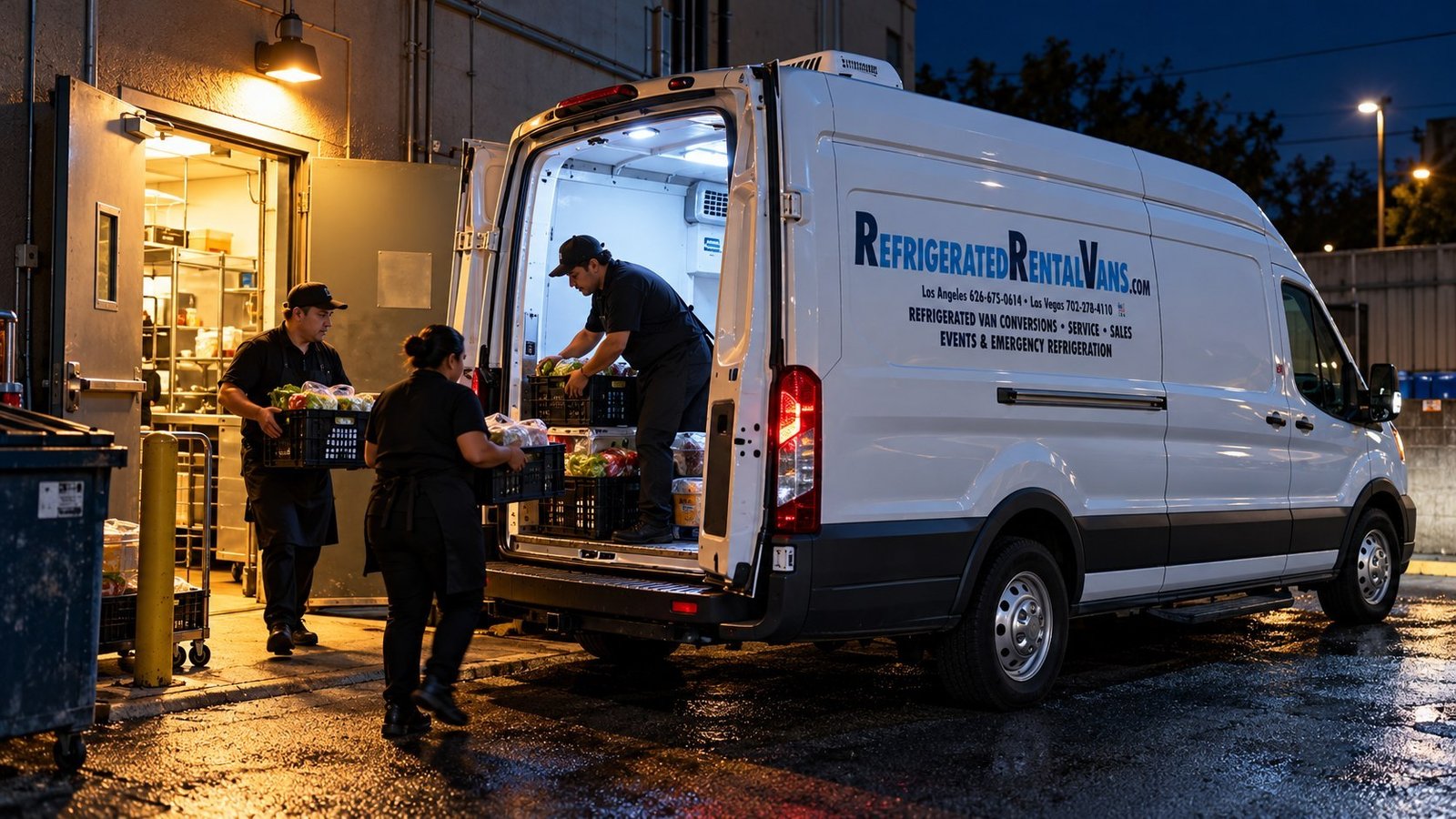
Emergency backup. And then there is the job nobody plans for: a walk-in cooler breaks down in Thanksgiving week. When that happens, a refrigerated van, truck, or trailer becomes a temporary cold room on wheels, holding the food at temperature while the cooler is repaired. That is a 24/7 emergency job, and it is one of the most common calls we get in the holidays.
Which vehicle fits which Thanksgiving job?
Not every Thanksgiving job needs the same vehicle. Here is a practical guide, based on the jobs we see every year.
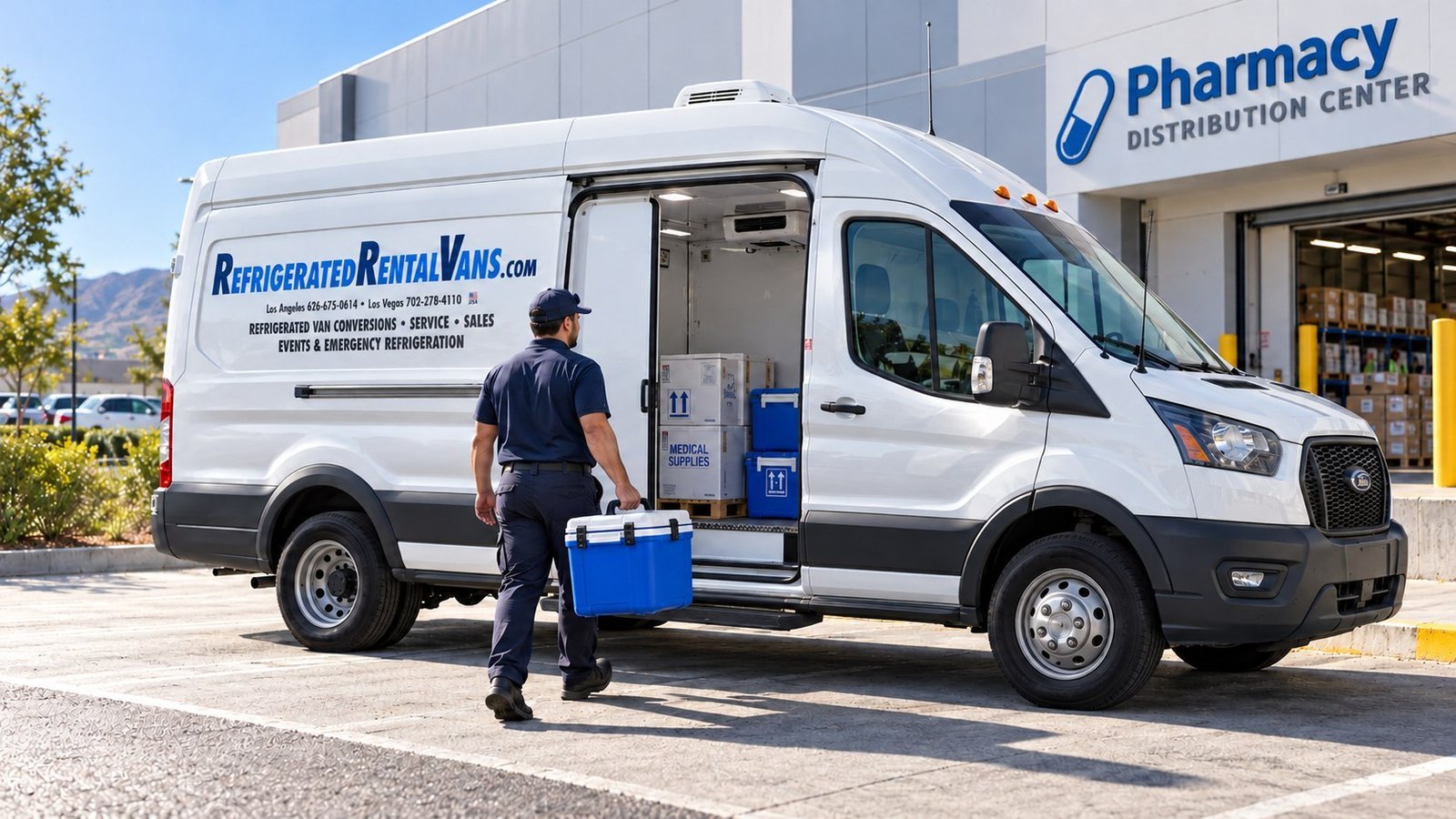
A refrigerated van is the right choice for most Thanksgiving work. It fits catering trays, grocery orders, meal kits, bakery boxes, and florist loads, it is easy to load and unload, and it is the most flexible vehicle for multi-stop routes in Los Angeles and Las Vegas. Vans are available from $99/day.
A refrigerated truck is the right choice for a larger job — a big catering event, a grocery restock, or a multi-venue route with a heavy load. It carries more, and it is built for longer runs and heavier cargo. Trucks are available from $179/day.
A refrigerated trailer is the right choice when you need extra cold storage at a venue, a market, or a kitchen, or when you need to tow cold storage to a site and leave it there. Trailers are available from $159/day.
All three can be set to chilled or frozen, and multi-temperature loads are possible depending on the vehicle. If you are not sure which size fits, tell us what you are moving, how much of it there is, and how many stops you have. We will help you pick the right one, rather than selling you a bigger vehicle than you need.
A simple Thanksgiving cold-food checklist
Use this checklist for any Thanksgiving food move, whether you are a caterer, a grocer, or a family feeding a crowd.
- Keep cold food at 40°F or below. That is the USDA and FDA number. Do not guess — use a thermometer.
- Keep hot food at 140°F or above. Do not let hot food cool into the danger zone on the way to the venue.
- Do not leave perishables out for more than two hours. One hour if it is above 90°F.
- Load cold into cold. Put cold food into a van that is already refrigerated, not a warm van.
- Pack in shallow containers. They cool faster, stack better, and are easier to load and unload.
- Keep cold and hot separate. Do not pack salads and desserts next to hot dishes in the same box.
- Refrigerate leftovers within two hours. Divide them into shallow containers, and reheat them to 165°F.
- Book early for Thanksgiving week. The vans go first, and the week before Thanksgiving is the busiest booking week of the year.
How to book a refrigerated van rental for Thanksgiving
Booking is simple, and it is the same easy rental process we use all year.
You pick your van, truck, or trailer. You sign your rental contract on our mobile app — quick, simple, no paperwork pile. Before you drive away, we take pictures of the vehicle, record the mileage out, and you get a copy straight away. When you return it, we do it again — pictures taken, mileage in recorded, condition checked, final agreement copy sent to you. If a scratch or dent was not yours, you never get charged for it.
For Thanksgiving week, book early. The Monday-to-Wednesday grocery rush, the Wednesday meal-kit pick-ups, and the Black Friday restock all draw on the same fleet, and the vans that are available on Monday are often gone by Wednesday.
Refrigerated Rental Vans serves Los Angeles and Las Vegas, 24 hours a day, 7 days a week, including Thanksgiving week. We rent refrigerated vans, trucks, and trailers for catering, events, deliveries, grocery, and emergency refrigeration.
Book your refrigerated van today. Call 626-675-0614 or visit RefrigeratedRentalVans.com. Los Angeles • Las Vegas.
Sources: Adobe holiday online sales forecast, 2026 ($26.1 billion online grocery, up 10.3%); National Retail Federation 2026 winter holiday forecast (about $1.013 trillion November–December retail sales); DoorDash holiday catering expansion, November 2026; USDA Food Safety and Inspection Service and FDA food safety guidance — cold food at 40°F or below, hot food at 140°F or above, perishables out of refrigeration no more than two hours (one hour above 90°F), reheat leftovers to 165°F.